Wednesday, April 2, 2014

Snapchat

I came across this informative article written by Monica Vila on Mashable.  She does an excellent job informing us adults to the ins and outs of Snapchat.  I plan on visiting TheOnlineMom more often to get up-to-date information about technology that children are using.


"Monica Vila is co-founder of TheOnlineMom, an organization that provides technology education to families and helps moms connect with brands they can trust.
And now for the self-destructing text … maybe.
 
Over the last few weeks there has been a lot of chatter about Snapchat, a very cool smartphone app that allows you to "chat" with friends via photos and now video. The idea is that you capture a "selfie" — or short video clip — using your phone’s front-facing camera, and then add a text caption or even a little artwork before sending it text-style to all your BFFs.

The popularity of the service was confirmed late last year when it was revealed that Snapchat had met the two accepted standards for success in today’s app-crazed world: regular server outages caused by too much traffic and an offer to acquire the service by Facebook. (Undeterred by the Snapchat founders’ refusal to sell, Facebook went ahead and launched its own Snapchat clone called Poke.) 

As well as offering the ability to add photos and videos to texts –- a huge hit amongst its target demographic of tweens and teens –- Snapchat has one other advantage: the messages self-delete after they have been viewed. That’s right: the sender can select a duration –- anything from 1 to 10 seconds –- after which the image, along with any added text or artwork, will self-destruct.

Should Parents Freak Out?

Of course, it didn’t take concerned parents too long to point out that such a service was perfect for "sexting" -– the unofficial practice of sending nude or sexually suggestive images via smartphones and other mobile devices. What better excuse for inappropriate behavior among oversexed teens, they argued, than a photo app that immediately destroys the evidence?
 
Unfortunately, kids who are determined to indulge in risky behavior hardly need Snapchat to achieve their goals. Ever since we started putting powerful digital cameras in immature hands, we have run the risk of our kids getting themselves into trouble. The safeguards haven’t changed: Talk to your kids so they understand the risks, and monitor their behavior so you can intervene before that risk becomes a serious problem.

Nothing Disappears From the Internet

And when you talk to your kids about Snapchat, Poke and similar messaging apps, you might want to point out that there is really no such thing as a self-deleting text. Snapchat recognizes just one of the ways in which its texts can live on by alerting the sender if the recipient takes a screenshot.

“What?” I hear you ask. “What’s the point of a self-deleting texting service if the person receiving the text can take a screenshot?” Exactly. Snapchat has no way to disable the recipient’s ability to take that screenshot, so all it can do is warn the sender when it happens. Add to that the ability of the recipient to use another smartphone or camera to capture a screenshot and that self-deleting feature doesn’t look quite so clever after all. 

Snapchat founder Evan Spiegel has been quoted as saying that the app was never intended for complete privacy — something that's borne out by a look at the company’s Terms of Service: “Although we attempt to delete image data as soon as possible after the message is transmitted, we cannot guarantee that the message contents will be deleted in every case.” Again, so much for self-delete.
 
Snapchat is a brilliant app that provides a novel and fun way for people to liven up those dreary texts. But let’s not kid ourselves –- or our kids –- that we’ve suddenly found a way to erase our digital footprints."

Tuesday, April 1, 2014

STAAR Wars

Today was our first day of STAAR testing.  Our fourth graders took Day 1 of Writing and our fifth graders took the Math.  I know that all of our students tried their very best effort today!

 One of our fourth graders showed up in this lucky shirt today:


Thursday, March 27, 2014

Spreading Positive Energy for Testing

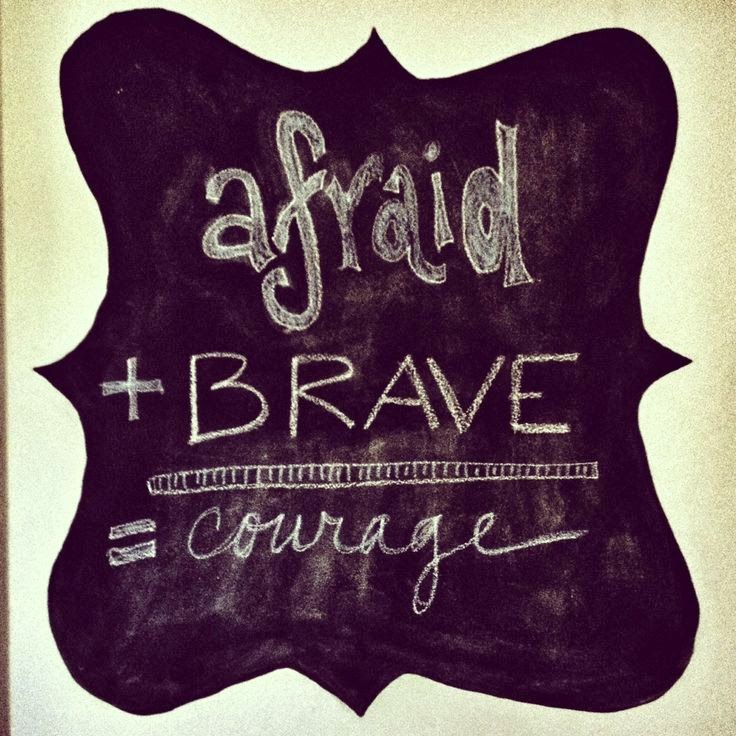
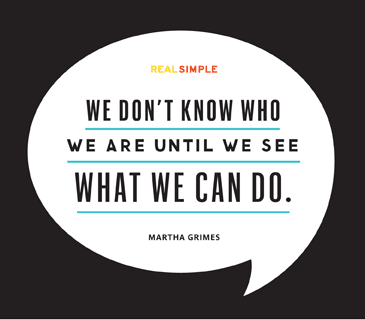
Throughout the year I post many different inspirational posters around our school to help students with challenging times.  With STAAR testing quickly approaching, I collected thoughts and quotes that would help students believe in themselves.  Here are some that I found on Pinterest to print out and display in the halls:


Wednesday, March 26, 2014

Austin ISD: A District Embracing SEL


Austin students learn social-emotional “survival” skills

As with most large school districts, Austin Independent School District’s 87,000 students are culturally and economically diverse and, in some cases, working to succeed despite difficult circumstances. 

As part of their effort to help all their students succeed, AISD is implementing a 5-year initiative to implement social-emotional learning (SEL)—including the Second Step program--in every school. And their efforts are already paying off. 

For example, in the three years since O. Henry Middle School began implementing SEL, discipline referrals in the first six weeks of school have dropped by 87 percent. 

AISD educators and students alike love the program. Says third-grader Isabelle, “Some schools probably don’t do Second Step or social-emotional learning, and their school’s probably not as fun as ours.” 

Check out the video here or below.

Test Anxiety

Right before testing I like to send home some information to parents of how they can help their children through increasing anxiety.  Many school counselors across the country do this to give families support for their anxious children.  I saw a great example on School Counselor Carol Miller's blog that I adapted for our students, seen below. 


STAAR Test Anxiety in 4th & 5th


It's typical for anyone to feel a little nervous or stressed before a test.  Test anxiety can actually be a good thing in certain amounts.  Some stress motivates us and enhances our performance, otherwise we wouldn't try.  But too much stress can have a negative effect and interfere with our performance.

I think it's important to address this topic with students to normalize their feelings.  With our first round of STAAR testing next week, I decided to meet with classes to talk about how they're doing.  I first had them complete a quick 6-question questionnaire about how they feel before a test.  If they answered "yes" to two or more of the questions, it alerted them that they might have some test anxiety.  I explained the positives of having some test anxiety, called eustress.  Eustress motivates us and can help us perform better on tests.  However, if we have too much stress before a test, it's called distress.  Our body can be dramatically affected by this and it can have a detrimental affect on our test performance.


On the other side of their questionnaire I included some ideas of things you can do when you feel anxious.  We would be doing a deep breathing exercise together in class today.  I asked students to get in a comfortable position in their chairs, sitting up or laying their head down, and close their eyes.  I then read aloud a relaxation script that took students through deep breathing, progressive muscle relaxation and a scenario of them floating on a cloud.  The room was so quiet you could hear a pin drop!

When they came back into awareness, each student received a special bookmark with tips for be prepared for STAAR testing:


Monday, March 24, 2014

Sneetches

A special visitor came to our kindergarten classes last week...a Star-Bellied Sneetch!  Students were curious about this new guest and were excited to learn more about him.  I read aloud one of my favorite stories about diversity, The Sneetches by Dr. Suess.  This story is available on video though YouTube, but I prefer to read it aloud so I can pause on different pages to enhance their understanding of what is happening in the story.

The Sneetches is about two types of creatures, separated by having or not having stars on their bellies. The Star-Belly Sneetches think they are the best, and look down upon Sneetches without stars. The Plain-Belly Sneetches remain depressed and oppressed, prohibited from associating with their star-bellied counterparts, until Sylvester McMonkey McBean comes along with his Star-on and Star-off machines. He begins to give stars to the Plain-Belly Sneetches, and soon they are happy, for they look like their elite counterparts. The original Star-Belly Sneetches are angry at no longer being different and special, so they get Sylvester to remove all their stars. This continues back and forth until no one can remember which Sneetches were originally what, and an epiphany strikes them all at once: that it really doesn’t matter whether a Sneetch has a star belly or not - they are all really the same, and can coexist and be friends with one another.


Throughout the story and afterward, I prompt students with the following questions.
  • How do the Star-Belly Sneetches feel? How do the Plain-Belly Sneetches feel?
  • If you were without a star, how would you feel about Sneetches with stars?
  • What kinds of things do we use as "stars" that make people feel special?
  • What makes you feel like a Plain-Belly Sneetch or a Star-Belly Sneetch?
  • What lessons did you learn?
  • List actions you will take to help everyone feel like they belong. 

We can coexist peacefully, regardless of our external differences.  I had students think about what makes them special, and shared something unique about me: I grow freckles on my nose during the summer!  Each student colored a Sneetch however they wanted and shared what makes them special and different form everyone else.  Here is a link to the pdf I created.