We, as adults, easily get lost in our daily to do's and prioritize everything but ourselves. When was the last time you did something selfishly for yourself?
Our sixth graders are feeling the weight on their shoulders with middle school applications, schoolwide projects, science fair and standardized testing just to name a few. After a relaxing winter break I thought it would be the perfect time to help our sixth graders recognize what they selfishly enjoy and then sprinkle more of that into their stressful lives.
I first shared the ways I take care of myself with this simple picture:
Then I opened up the discussion for them to start sharing the things they enjoy. We used a simple graphic organizer that I made in Microsoft Word (you can download it here) to list out ways we can slow life down and show ourselves some love. I separated the ideas into 3 main categories of self love: our mind, our body & our support system.
In fourth grade this week we finished up our bullying unit with the much anticipated Dare by Erin Frankel. This is the third book in The Weird Series that features the same story told from 3 different perspectives: the bully, the bystander & the target. Students were anxiously awaiting the last character's perspective because it most relates to the position they are often in.
After reading and discussing the story from Jayla's point of view, we created flipbooks to differentiate the behavior of a bystander compared to an upstander. Whereas a bystander = stand by; an upstander = stands up. We brainstormed qualities of each and they used their creativity to get the point across.
In fourth grade we began the first book in Erin Frankel's series, named Weird. Weird tells the perspective of a "target" in a bullying situation occurring at school. The main character, Luisa, thinks that by changing herself it will end the bullying and relentless teasing. She eventually learns that the more she is herself, the happier she is and her confidence soars - putting an end to the bullying.
I asked students to think about what makes them "weird" and unique. What makes you special and different from everyone else? With these questions in mind, students began a fun & colorful art project to show off who they really are on the inside.
Habit 2 — Begin with the End in Mind
Have a Plan
I plan ahead and set goals. I do things that have meaning and make a
difference. I am an important part of my classroom and contribute to my
school’s mission and vision. I look for ways to be a good citizen.
We began this weeks lesson by reviewing what they remembered from Sean Covey's book about Habit 2. I followed up with an inspirational video created by the Kahn Academy called "You Can Learn Anything."
Students loved the idea that we all start at "0" and we must learn everything through our experiences and our mistakes. I shared a graphic of famous failures to extend our discussion on how we all face obstacles in our life and it's how we choose to handle them that makes all the difference.
I then had students complete a series of activities compiled by Rachael Wallace form TeachersPayTeachers (link here) The first was a survey on if they are a "go-getter" or a "day dreamer." Armed with this information, we created a Wish List of things they were interested in achieving.
After teaching them how to write a SMART goal, they picked one thing off of their wish list to turn into a SMART goal.
S - Specific
M - Measurable
A - Attainable
R - Realistic
T - Timely
Here are some example pages from 2 students:
Goal: Apple Laptop
Goal: Pogo Stick
With the end of the school year looming, many students are developing worries about the future. Their support system at school will be on vacation until August, their daily routine during the week will get mixed up, they won't see their classmates every day, they might go on vacation to new places, etc. I thought this would be a perfect time to read Wilma Jean Worry Machine by Julia Cook to our first graders. This book illustrates how a young girl catastrophizes her day, only to find that nothing goes wrong and everything goes right. We learn again and again that things work out for her, but she still continues to worry about the unknown. We all model her "pickle face" that she makes when she worries, and I enjoyed one students comment of how much I must be worried because I have a lot of wrinkles like Wilma Jean...

In the middle of the story I pause and ask students to write down one worry they might be having on a post-it. It could be a worry they have today, a worry about the future, a worry about second grade, any worry works! After they wrote down their worry, I had them place it on the chart (just as Wilma does in the story) to describe it as a worry they can control or a worry they cannot control. Worries we can control are flexible, like playdough. There are things we can do to make them better or prevent them. Worries we cannot control are more like rocks. No matter what we do, they can't be changed - like the weather, for example.
Most students start by putting their worries at the bottom of the chart, stating that they cannot control them. However, as we start discussing what we can control about each worry with suggestions from our classmates, the post-its start moving to the top of the chart just like Wilma's do in the story.
For example, what if we don't like the lunch that is served in the cafeteria? Well, we can take home a lunch menu to know what lunch will be ahead of time. We also can pack a lunch from home if it's something we don't like to eat. By focusing on the little things that we have control over, the worry begins to shrink and not matter so much.
A parent of one of our fifth grade students wrote an excellent article on the Huffington Post that details the stress our young students go through when applying to middle schools. I agree with her opinion that this is a lot of pressure to put on our fifth graders and it makes me wonder how I, as their school counselor, can help alleviate this unnecessary stress while also supporting our students and their goals for the future.
A Positive Spin on Bossy
Written by Amy Arndt
"Earlier this semester, my fifth grade daughter started deciding what
to do about middle school. Her elementary school offers an optional
sixth grade year, a gentle, loving cocoon that my husband and I found
extremely appealing, mainly because we love the school and the teachers,
but also because it felt safe and familiar. For kids ready to leave
elementary school behind, they have the option of attending the
appropriate feeder. For kids looking for a more challenging academic
experience, they can apply to a magnet or fine arts program. These are
competitive programs that require academic excellence, teacher
recommendations, entrance tests and essays.
If you ask me, this
is a lot to put on a 10-year-old. When I was going into sixth grade, my
biggest concern was which fluorescent earrings looked best with my
pinstriped jeans and if my friend Courtney would be willing to wear her
matching fluorescent earrings on the same day.
Never one to take
the easy route, our daughter boldly announced that she wanted to apply
for all four of the magnet/fine arts programs. I supported the decision,
but also informed my daughter that I was not filling out a single
application. If she wanted to apply, this was her gig. Together, we
created a project schedule on a poster board to log each school's
deadlines. My husband and I agreed to cart our daughter where she needed
to go, and to help her work through her essay topics, but we both
agreed that this was her journey.
One evening, while typing one of
the entry essays, my 10-year old looked up and said, "What's that word
that's a positive spin on bossy?"
Before I had a chance to answer, she said, "Leadership. That's it. Leadership skills!"
I
had an immediate flashback to kindergarten at the parent-teacher
conference. The teacher already knew us because she'd taught my
stepchildren, so she knew she could be straight with us.
"She's doing a great job," she began, "She's a big helper."
Uh-oh. I'd heard that line before. Our daughter was a "big helper" in pre-k as well.
"Sometimes,"
she went on, "I have to take her outside, point to the sign above my
door, and ask, 'Who's name is that?' And she will read my name, and I'll
say, 'That's right. That's my name, and I'm the teacher. If I need your
help, I'll let you know.'"
With that, my husband died laughing.
From that point on, every teacher conference began with the story of how
our daughter needed to be reminded that she wasn't the teacher. This
made for a funny story, but it also gave me pause.
Was calling our daughter "a big helper" just steps away from calling her bossy?
Lately, thanks to Sheryl Sandberg's LeanIn.org and the Girl Scouts collaboration, Ban Bossy,
the word "bossy" is a bad, bad word. According to Ban Bossy, by middle
school, girls are less likely to take leadership roles, and that
unfortunate trend continues into adulthood. We're asked to pledge not to
use the word "bossy" at all, and I'm fully on board with that, even
where boys are concerned. Who wants to be called bossy anyway? But call
our girls and boys leaders? Sounds like a great idea to me.
Luckily
for us, our daughter's kindergarten teacher (and, for that matter,
every teacher she had from that moment on) supported our daughter being
"a big helper." They encouraged her to help, and as a result, she was
able to channel her need to help in the right direction. Because of a
positive spin on bossy, my daughter had the confidence, at 10, to decide
on her own that she was ready to apply for an academically-challenging
school program. At 10, my daughter knew that there was something
negative about the word "bossy," but she understood that a simple word
choice could turn bossy into something powerful.
I give a large
portion of the credit to our underpaid, overworked school teachers for
preparing our daughter for middle school. So much of who our daughter
has become is due to the hardworking, compassionate teachers who cared
about our daughter's personal development as well as her academic
success. Sure, our education system is flawed, standardized tests are
the pits and we have work to do to educate all children on an acceptable
level, but the teachers who commit their professional lives to our
children deserve our praise.
On the afternoon that a stack of
important mail arrived, my daughter cautiously opened the envelopes
while I nervously documented it all on video. Each time she opened a
letter, her face lit up.
Afterwards, she promptly went outside on the
front porch, closed the door and screamed at the top of her lungs while
my husband and stepson and I gave each other high-fives. When she came
back inside, I could already see the change. She's ready to take middle
school by storm, and you can bet she'll be a leader when she gets there."
Original post: http://www.huffingtonpost.com/amy-arndt/a-positive-spin-on-bossy_b_5129792.html
David Shannon's A Bad Case of Stripes is such an entertaining book to illustrate to students how important it is to be yourself. We met Camilla Cream who LOVES lima beans but is afraid that others will make fun of her for it. She hides this part of herself and as a result far worse things begin to happen to her. The pages are filled with hilarious illustrations of her transformation that keep students hooked while reinforcing an important theme.
After we read and discussed the story, students water-colored what they thought might happen to them if they didn't show others who they really are. I printed out their faces, ahead of time, onto thicker construction paper in black & white so they could add the details they wanted to their skin with paint.
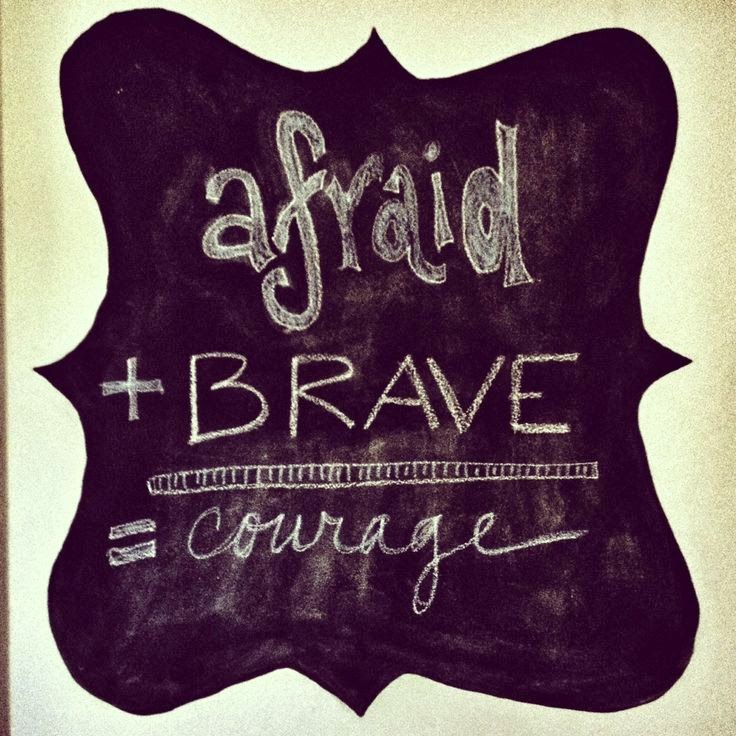
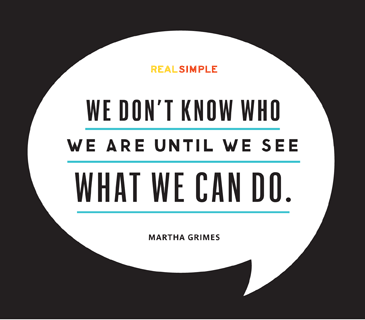
Throughout the year I post many different inspirational posters around our school to help students with challenging times. With STAAR testing quickly approaching, I collected thoughts and quotes that would help students believe in themselves. Here are some that I found on Pinterest to print out and display in the halls: